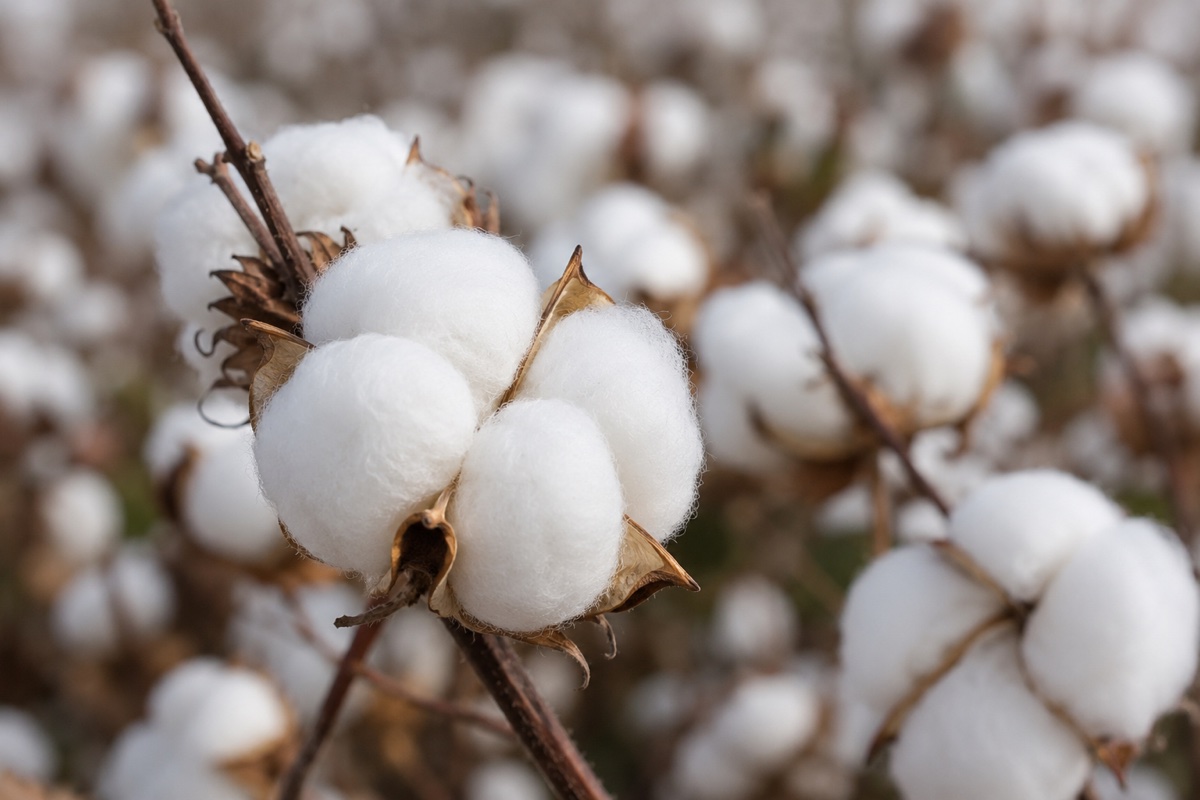
Cotton
Soft, breathable, and wonderfully versatile, cotton is a naturally durable, easy-care fabric that feels gentle against the skin and lends itself beautifully to everything from everyday essentials to refined home furnishings.
Maison Marguerite is a family business with nature at its heart.
Its story begins in 1998, when co-founder and creative director Margit Schmeide opened her first interior design shop. What started as a personal passion for beautiful interiors, thoughtful objects and timeless materials gradually grew into a lifelong dedication to creating homes with warmth, character and a strong sense of authenticity.
At the time, Margit was also a working mother raising her young family in Bruges, close to the Belgian coast. Summer afternoons and weekends were often spent by the sea, surrounded by dunes, sand, salt air and the quiet beauty of nature. For her children Sophie and Friedrich, this way of life became formative. Growing up close to both nature and their mother's creative work, they developed an early appreciation for design, craftsmanship and natural materials. By different paths, both Sophie and Friedrich eventually found their way into the world of interiors.
From the very beginning, natural materials played an essential role. Inspired by the landscapes of Belgium and the North Sea coast, Maison Marguerite is rooted in a love of materials that feel honest, tactile and connected to the natural world.
At the heart of this story is flax, a modest flower with an extraordinary heritage. For centuries, flax cultivation and linen production have shaped the cultural and textile history of Belgium and Northern Europe. Its transformation from field to fibre and eventually into cloth reflects everything Maison Marguerite values: natural beauty, craftsmanship, longevity and quiet refinement.
This fascination with flax became the starting point for Maison Marguerite's own collection of natural woven fabrics. Linens, wool blends and other carefully selected fibres are chosen not only for the way they look, but for the way they feel, age and live within a home. Texture, weave and the character of the raw material remain central to every design.
Maison Marguerite celebrates fabrics that are deliberately tactile rather than overly perfect: woven materials with depth, softness and individuality. Natural fibres, considered colour palettes and timeless patterns form the foundation of a collection designed to sit effortlessly within both traditional and contemporary interiors.
Craftsmanship is equally important. From weaving and finishing fabrics to upholstery, curtain making and furniture, the brand works with skilled makers who understand the importance of proportion, material and detail. The result is a collection that feels refined while retaining the honesty and character of something beautifully made.
Today, Maison Marguerite has grown beyond its original fabric collection into a wider world for the home. Yet textiles remain at its heart. Fabrics provide the starting point from which rooms, furniture and objects evolve, bringing together natural materials, understated design and a belief that the most beautiful interiors are those made to be lived with.
Linen is the world's oldest fabric, with evidence of its use in ancient civilisations. In its natural off-white or light brown state, it is particularly eco-friendly and wonderfully versatile: cool in hot weather, yet warming in winter thanks to its temperature-regulating qualities. Strong and resistant, linen reaches far beyond fashion. Its production is labour-intensive and more costly, but it is this extra time and care that gives linen its exceptional quality.
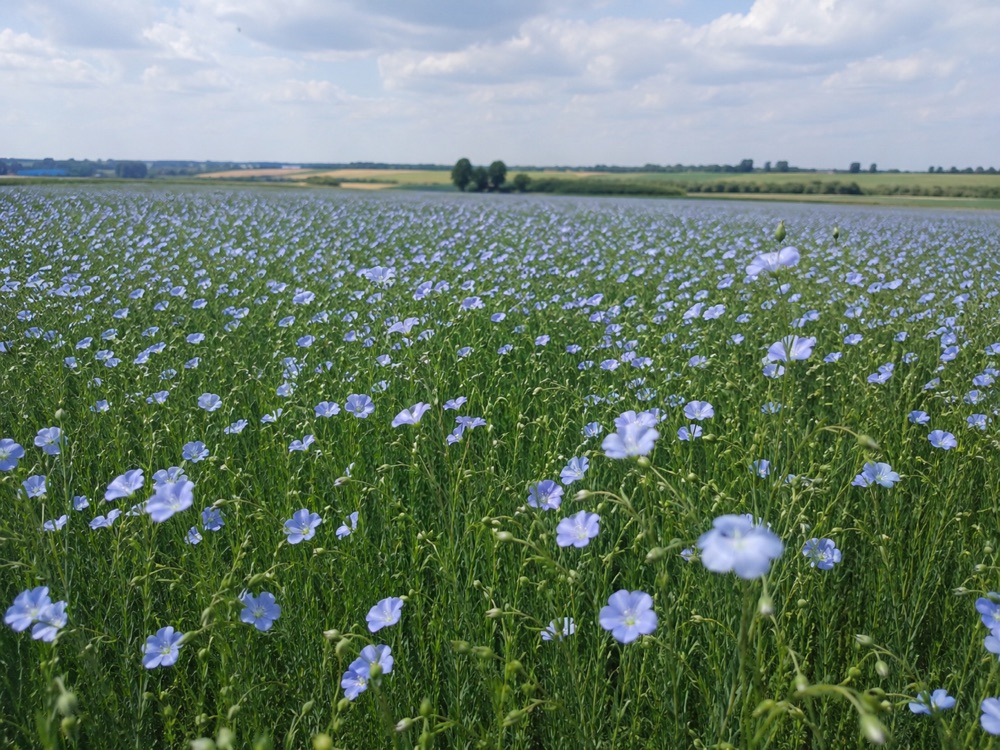
Planting takes place in March or April, depending on the region. Flax seeds are planted 1 to 2 cm deep and take only 100 days to reach maturity, with some 80 to 100 leaves sprouting from the stem. Growing to a height of around 100 cm, the plant blooms in June, each producing a single flower that lasts for just a few hours.
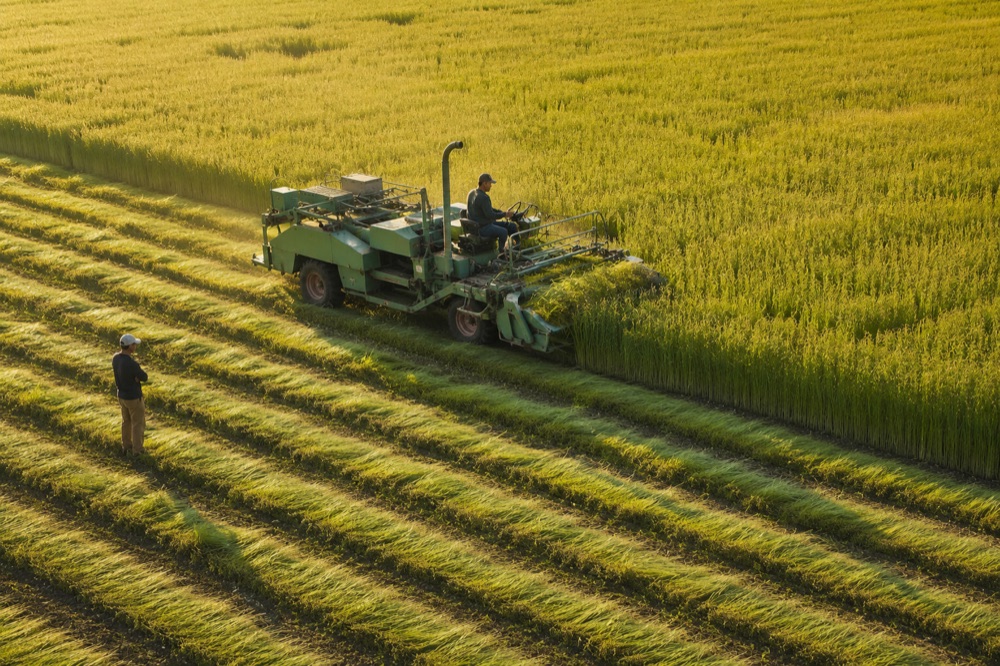
Pulling begins in July, once the lower third of the stalks have lost their leaves. Flax is not reaped but pulled, to preserve the full length of the stalks. These are then gathered into bundles about 1 metre wide, known as windrows, which are left to lie in the fields. After pulling, the long roots remain in the soil and naturally fertilise it, giving flax its well-earned reputation as an excellent rotation crop.
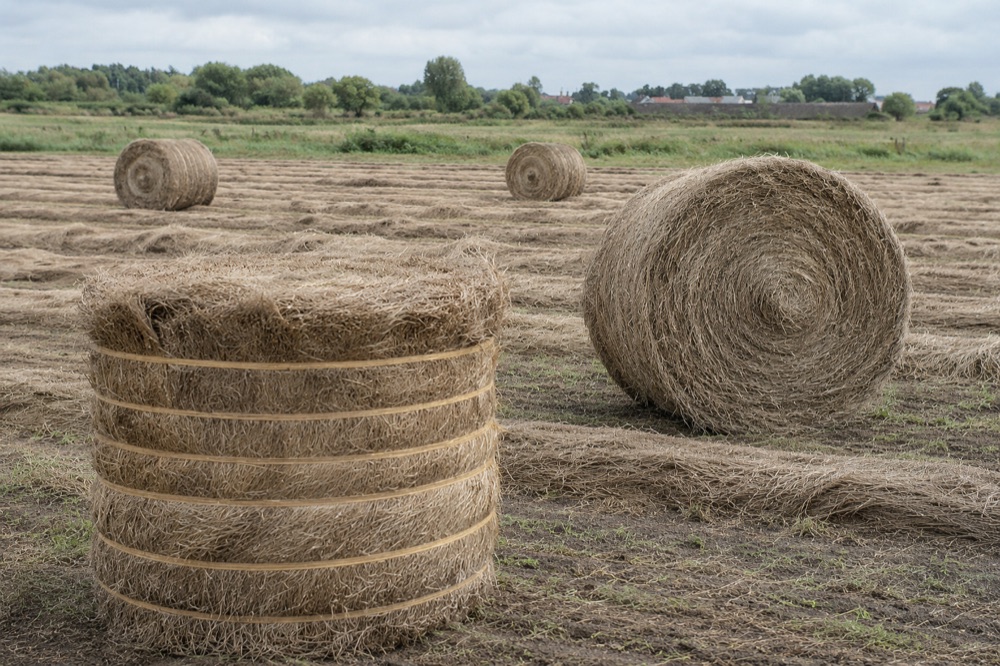
Retting, from July to September, is the first step in the transformation from plant to fibre and is entirely natural. Rainwater, morning dew, and sunshine help the naturally occurring microorganisms and bacteria in the soil to break down the pectin that binds the flax fibres to the hard inner core of the stalk. To ensure even retting, the windrows are turned over midway through the season. Once retting is complete, the flax is gathered and bundled into bales.
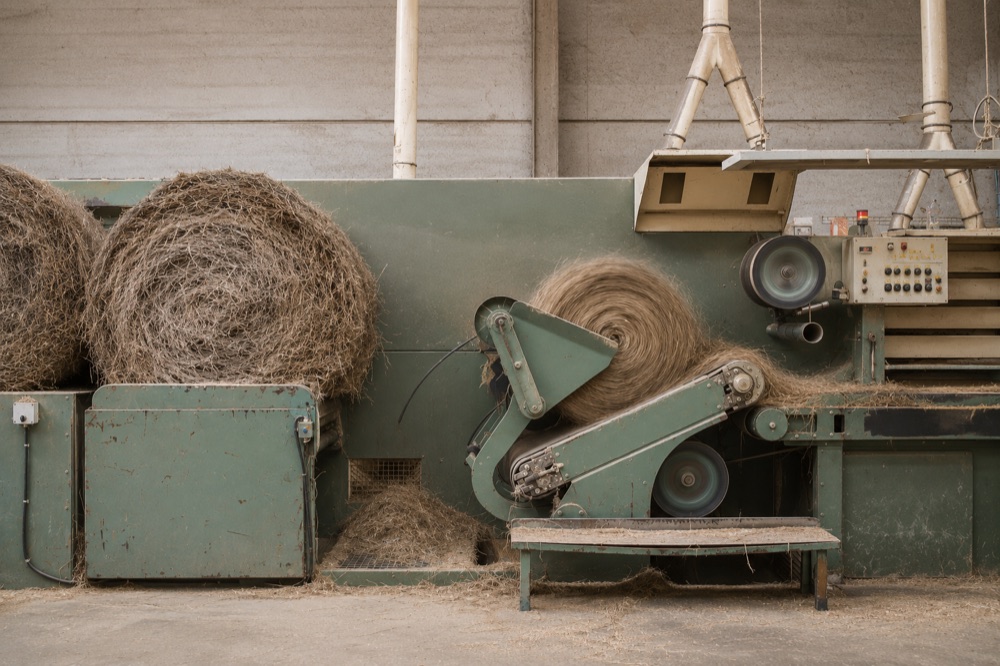
The flax fibres are found in the outer envelope of the stalk. They have to be extracted and separated from the inner wooden core, known as the shives. This is done through scutching, a mechanical process that can be carried out at any time of year. The successive steps are known as shelling, stretching, grinding, and threshing. Nothing goes to waste: all fibres, long and short, along with every by-product (seeds and shives) are put to use, for example in animal bedding.
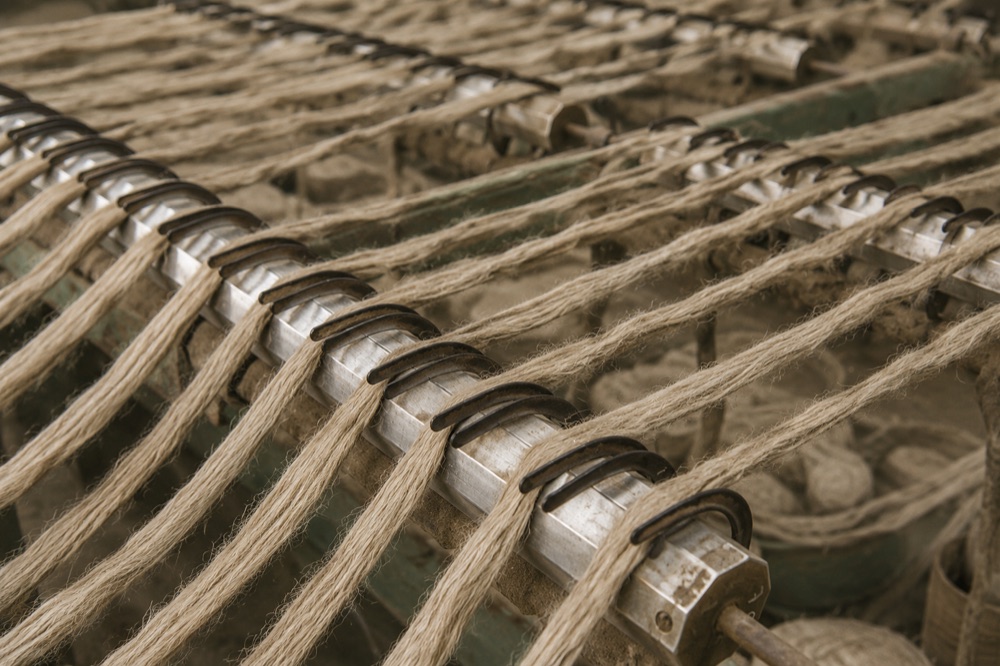
Combing, also known as hackling, is carried out by either the scutcher or the spinner. Any remaining impurities in the fibre are removed, after which the fibre is straightened, calibrated, and stretched into continuous, soft, and glossy ribbons.
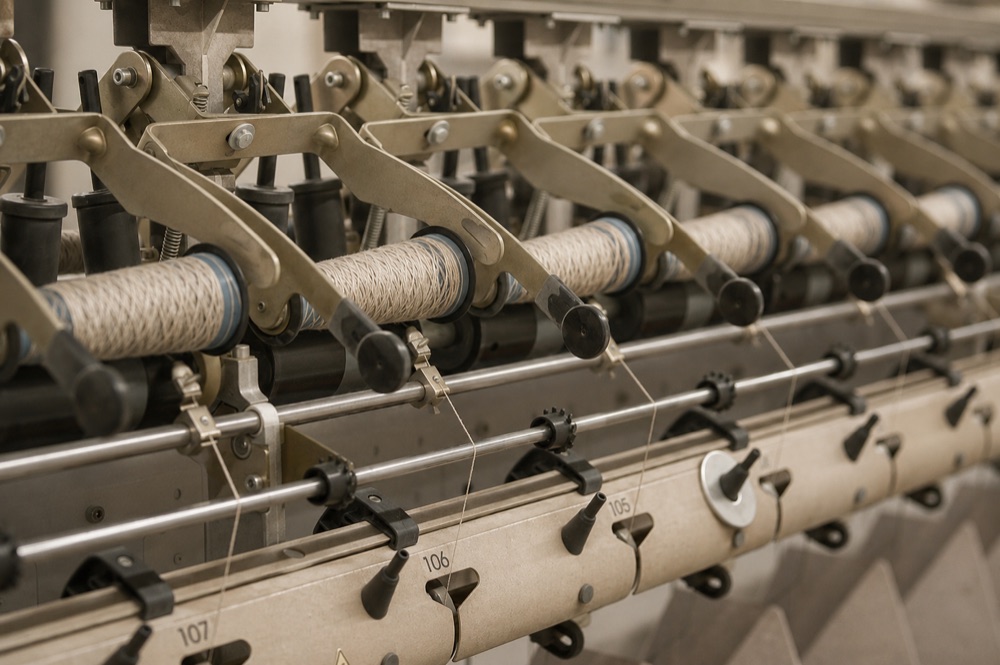
The blended and stretched slivers are twisted using different techniques to create a vast range of yarns. Wet spinning produces fine yarns, used for clothing and household linen, while dry spinning produces thicker, more rustic yarns, used for home furnishings and rope. Yarn counts are sorted by metric number (Nm), which corresponds to the number of kilometres of yarn produced from 1 kg. The higher the value, the finer the yarn, ranging from Nm1 to Nm60, and even Nm100.
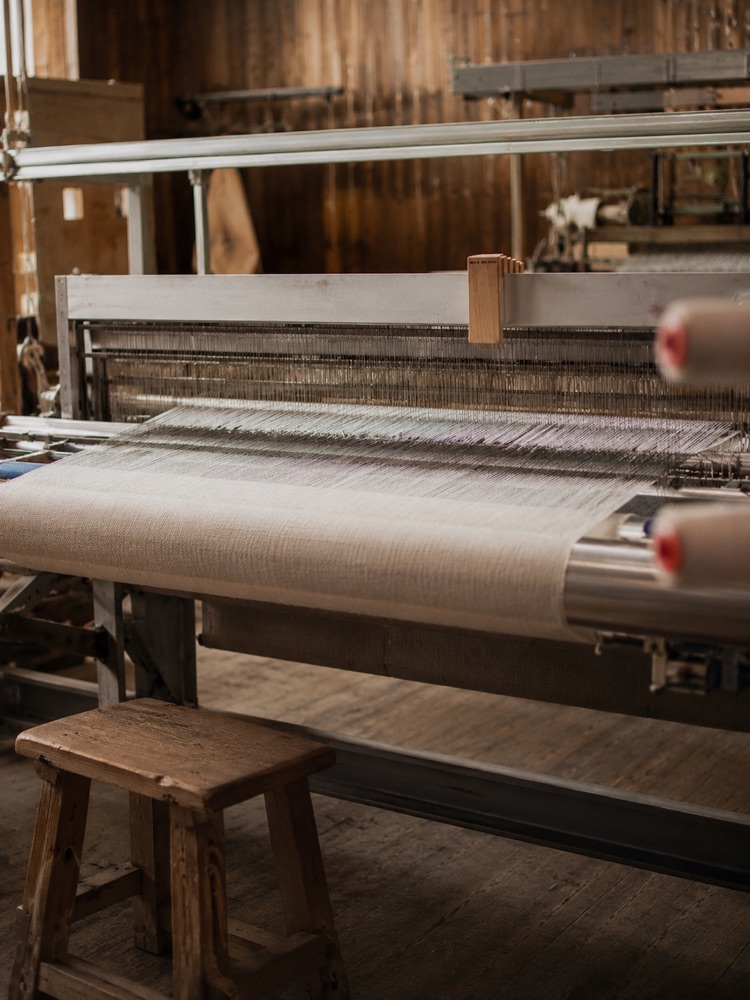
Weaving involves criss-crossing warp yarns (which run lengthwise) with weft yarns (which run width-wise) to create a woven fabric. The many different weaves (twill, satin, and others) combined with varying thicknesses and yarn effects, have led to the development of a wide range of creative fabrics for fashion, household linen, home furnishings, and a variety of finishes for luxury goods.
Soft, breathable, and wonderfully versatile, cotton is a naturally durable, easy-care fabric that feels gentle against the skin and lends itself beautifully to everything from everyday essentials to refined home furnishings.
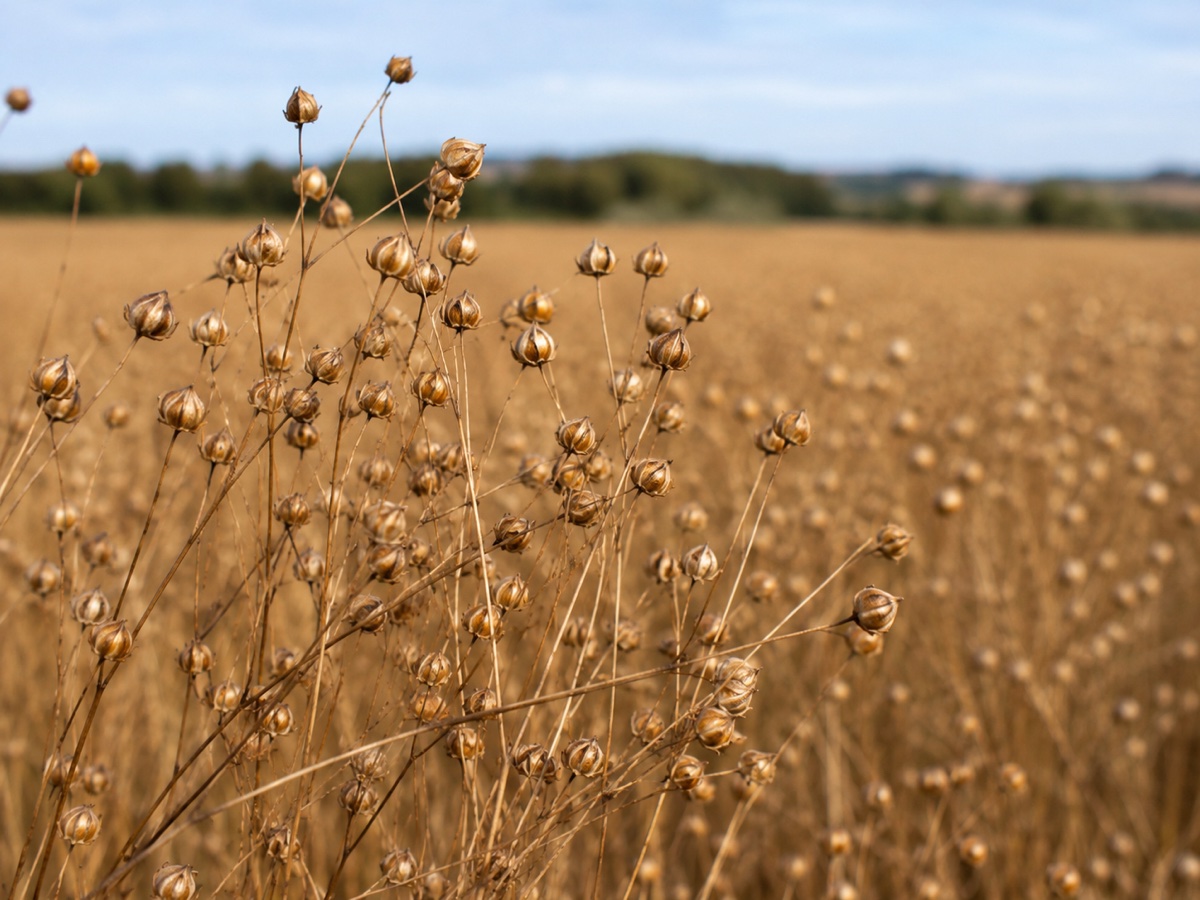
Naturally strong, breathable, and temperature-regulating, linen is a beautifully durable, eco-friendly fabric that softens with age and only grows more characterful with every wash.
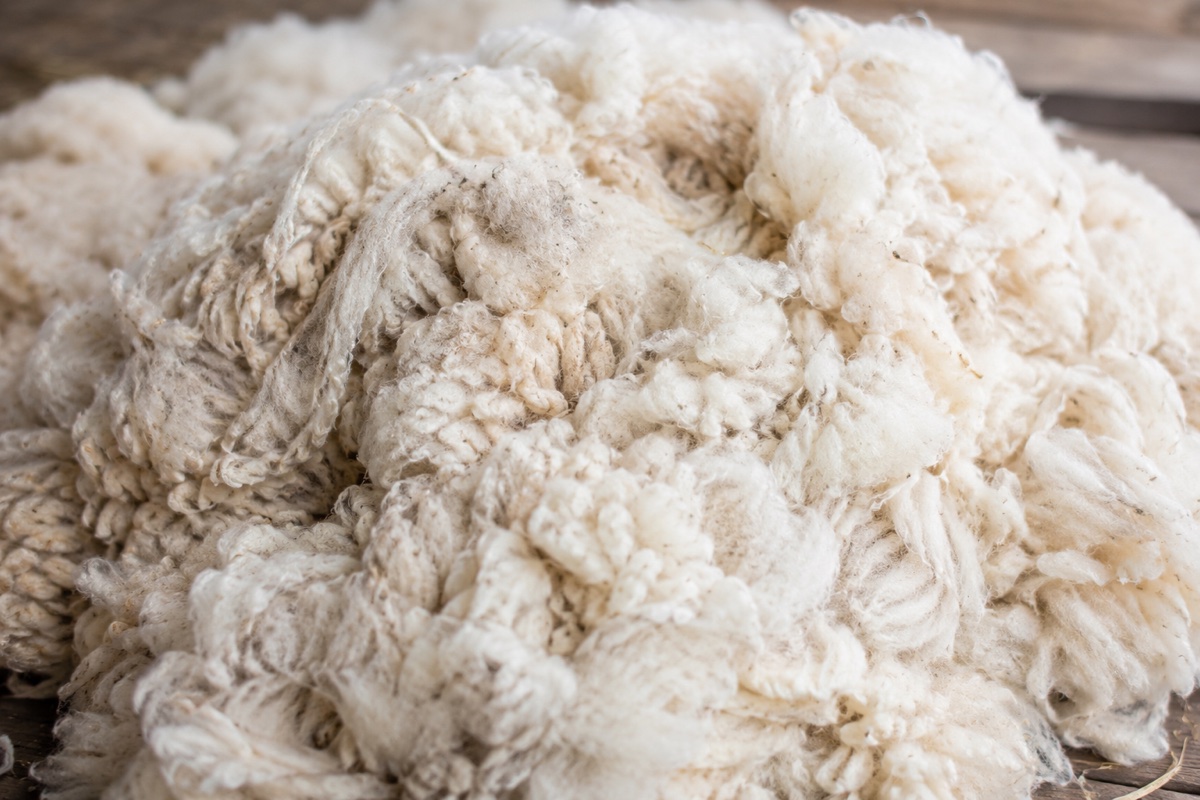
Naturally warm, resilient, and beautifully soft, wool is a breathable, temperature-regulating fabric that wicks away moisture, resists odours, and ages gracefully, bringing lasting comfort and timeless character to clothing and interiors alike.